

5 Songs From 1980 That Define Pop History
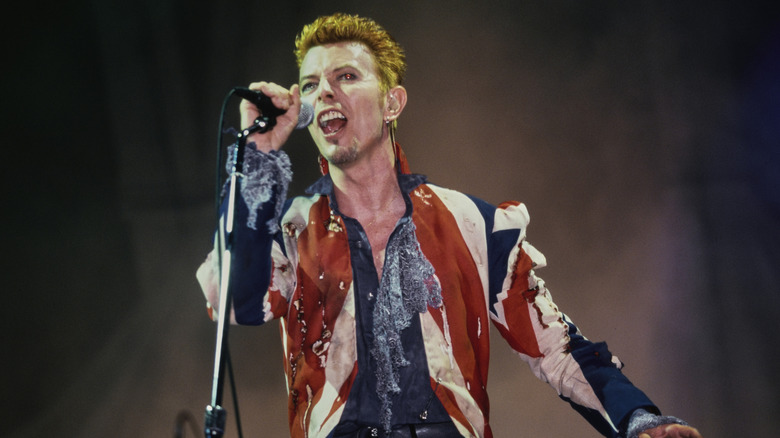
After the dazzling musical diversity and experimentation of the 1970s, it was anyone's guess what the 1980s would bring. By the end of its first year, however, much would be made clear — this was going to be one strange and eclectic decade. In the complicated swirl of musical styles, many genres bled together and pooled influences, evolving one new subgenre after another. As is always true, this change in the cultural landscape affected the most widely consumed genre the most: pop music. Pop was refined to something special in the '80s, producing some nearly-perfect and universally beloved songs, no matter how unique and varied they became.
In 1980, the future of pop was foreshadowed or downright foretold by a number of its biggest hits. Standout hits from Queen, David Bowie, Billy Joel, Blondie, and Diana Ross signaled the transition into a new age, as well as in some cases, bidding a fond farewell to trends that were beginning to disappear. Each is a signpost pointing to or away from some musical fad on its way in or out — and in some cases, an overt reaction to it. Songs like that help define the history of pop, which inevitably means rock, too, and so are worth re-appreciating. Read on to examine the impact of some of 1980's most monumental hits.
Another One Bites the Dust — Queen
As of 1980, disco was in its final throes, having sharply declined in popularity over the course of '79. Strangely enough, one of the genre's last massive hits didn't come from the Bee Gees, ABBA, or any other disco powerhouse. It came from pop rock legends Queen, as one of many stops on their tour through every new sound they could find. As Brian May explained it to Guitar Player, "We had this idea that we never should repeat ourselves, so we deliberately put ourselves in different situations of writing and recording just so we would keep moving and keep breaking down any barriers that might seem to be there. I felt another barrier was broken with 'Another One Bites the Dust.'"
Unlike so many of Queen's other hits, "Another One Bites the Dust" is exceptionally minimalist and almost entirely built around a single funky bass line and disco drum beat. More than perhaps any other of their hits, it displayed the band's ability to make something truly iconic out of very little. The song became the band's final No. 1 hit in the U.S., and of course, eventually gained new life as a sports anthem. Even almost 50 years since its release, you'll hear "Another One Bites the Dust" at every other sports game and friendly competition there is.
Ashes to Ashes — David Bowie
Though it failed to even hit the Billboard Hot 100 in the U.S., David Bowie's "Ashes to Ashes" was a No. 1 hit in the U.K. and played a major role in the development of the music video art form. Not only that, but owing to its relative lack of success in the U.S., a good deal of Bowie fans might not even be aware that the song is an official sequel to "Space Oddity," following Major Tom as his life has taken a dark turn.
If anyone at the time had any doubt that Bowie would survive the transition into the '80s, "Ashes to Ashes" is the type of single that would have proven them wrong. It's odd and unpredictable, like you'd expect from Bowie, and with an expectedly catchy hook and slick production to tie it all together. Just the fact that he had dared to revisit one of his most famous songs and reveal that beloved character Major Tom was "a junkie / Strung out in heaven's high / Hitting an all-time low" speaks to the audacity with which Bowie still operated. In years since, "Ashes to Ashes" has repeatedly been cited as one of Bowie's best.
The music video to "Ashes to Ashes" is arguably more iconic than the song itself. In 1980, the art form was still in its infancy, and costing around £250,000, it was the most expensive music video ever produced up to that point. Its dreamlike ethereality is worth experiencing, if for no other reason than to see a landmark of the early medium.
It's Still Rock and Roll to Me — Billy Joel
Much of what would come to define the signature sound of the '80s, such as new wave, had actually already risen to prominence in the '70s. In response to the new style, a few old stalwarts balked. One of them, Billy Joel, balked so well in fact that it scored him his first No. 1 hit. "It's Still Rock and Roll to Me" was released in 1980, as a response by Joel to both shifting genre labels and what he perceived as inaccurate press.
In a very candid 1980 interview with Rolling Stone, Joel explained "It's Still Rock and Roll to Me" at length. "Don't give me any of this New Wave," rants Joel. "Using a Farfisa organ because it's so hip. It's just a reaction to a rediscovered past, and a rejection of Emerson, Lake, and Palmer using multi-deck synthesizers." He later added, "What I'm saying in 'It's Still Rock and Roll' is that I happen to like Donna Summer's hits. I'd never listen to them from the perspective of a Van Halen or Rush freak." Joel's larger point was that musicology, complexity, labeling, trends — none of them were what music was really about. What really mattered was, as he said elsewhere in the same interview, "a beat, then a melody." To Joel, it was that simple, and no matter how much music would evolve (or been said to have evolved) throughout the '80s, rock 'n' roll was still just rock 'n' roll to him.
Call Me – Blondie
Blondie's "Call Me" was the single best-charting rock song of 1980, spending 25 weeks on the chart, with six of those being the No. 1 spot. Though it wasn't the band's only No. 1 hit, it held the spot for the longest by far, making it their best-charting single ever. During development, the song became associated, however briefly, with an impressive pedigree of talent before it ever hit the airwaves.
The song was written by legendary composer and producer Giorgio Moroder, often called the "Father of Disco." Giorgio, as he is more commonly known, had created the song for the soundtrack to the upcoming Richard Gere movie "American Gigolo," where it became the music to its relatively notable opening sequence. Giorgio initially wanted Stevie Nicks to sing the song, but when that proved impossible due to contract issues, Giorgio gave it to Debbie Harry and Blondie.
As Harry revealed in her memoir "Face It," the track falling into her lap was pure fortune. "To spend six weeks at No. 1 ..." recalls Harry. "We didn't expect it, but it legitimized us in this country and made people realize that we were adventurous and had a vision that could transcend the styles of the day ... I hear bits and pieces of 'Call Me' in other people's songs even today, not direct copies of it, but similarities ... It was the right place, right time, right sound. It all just sort of fell into place" (via Billboard).
I'm Coming Out — Diana Ross
An anthem among anthems, "I'm Coming Out" by Diana Ross was simultaneously a demonstration that Berry Gordy's Motown would remain a powerhouse in the '80s and a cry of relief for the singer as she finally left the label. Owing to that, and its eventual status as a Pride anthem, the song endured as one of the biggest Motown hits of the '80s and a timeless track beyond.
In 1980, Ross was looking to reinvent her career and find new collaborators to help her do so. She found Nile Rodgers and Bernard Edwards, the founders and hitmakers behind disco band Chic, and the three created what would become Ross's best-selling album ever, "Diana." The album produced two monster hits: "Upside Down," which hit No. 1 on the Billboard Hot 100, and, of course, "I'm Coming Out." Although the latter only got so far as No. 5, its second life as a Pride anthem has caused its relevance to outgrow that of "Upside Down," a trend that continues year after year.
In addition to its role as an anthem, "I'm Coming Out" has lived on through various other quirks. Because of its introductory nature, it has served as Ross's signature opening song in concerts in the decades since, has been covered multiple times, and has been extensively sampled by hip hop and dance artists. In terms of lasting impact, "I'm Coming Out" is up there with the greatest Motown songs of all time.